

Overview: |
| Title: Adaptive Investment Strategies for Shifting Market Landscapes |
| Date: Wednesday, October 7, 2026 |
| Time: 1:00 PM Eastern Daylight Time |
| Duration: 1 hour |
Register Now: |
| Already Registered? |
Summary: |
||
|
Broad ETF exposure has become core to many portfolios, offering transparent, low-cost access to asset classes in a single trade. Within that exposure, however, often comes a rather plain vanilla structure that aims to track a market without actively addressing changing market regimes or oscillating levels of risk. Global X’s Adaptive strategies address this by seeking to track rules-based indexes that adjust positioning as conditions change without discretionary calls or trying to time markets. The goal isn’t to avoid risk, but to manage it more deliberately. In this webinar, we’ll cover three ways Global X applies this approach:
Accepted for 1 CFP / IWI / CFA CE Credit |
||
Speakers: |
||
|
||
After joining Global X in 2023 as an Options Research Analyst, Robert now leads the broader Income arm of the research team headlined by its covered call suite, preferred stock, and master limited partnership products (MLPs). Prior to his arrival, he worked as an equity research analyst and chief editor at Value Line, an independent research provider, where his primary coverage focused on the Aerospace & Defense, Information Services, and Semiconductor sectors. While employed there, Robert also led Value Line’s Options Research Team. He earned his BA and MBA from Adelphi University with concentrations in Business Management and Marketing, respectively. |
||
|
||
Ben joined Global X in March 2026, bringing experience in asset allocation and ETFs. Previously, Ben worked with retail investors, financial intermediaries and institutional retirement plans, where he served as an investment strategist and ETF model manager for a turnkey asset management platform (TAMP) supporting independent financial advisors and retirement plans. In addition to managing portfolios, he has published market commentaries and blog posts, made appearances on Bloomberg and CNBC, and hosted a podcast series. Earlier in his career, Ben worked on the institutional side, first as a researcher supporting institutional plans and fund-of-funds, and later as an equity portfolio manager using quantitative models. He is also a board member and Head of Programming for the CFA Hartford Society and has taught an advanced investment course as an adjunct instructor at UMass Amherst. Ben holds an MBA from UCLA Anderson School of Management and a BA from UC San Diego as well as the CFA and CAIA professional designations. |
||
|
||
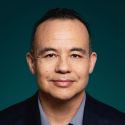
Patrick is an Investment Manager of Adaptive Wealth Strategies and serves as SVP, Financial Advisor at the advisory firm, where he speaks with clients and advisors about their investment portfolios and understanding the risk that is necessary in pursuing their goals. He graduated from the University of North Carolina at Charlotte with a Bachelor Degree in Finance and a minor in Economics. Patrick earned his MBA from Wake Forest University in 2014. He is also a CFA charter-holder and has completed his CIMA designation. Patrick is presently an adjunct professor, as well, teaching Financial Management at UNC Charlotte. |


This presentation features a representative of Adaptive Wealth Strategies® ("AWS"), together with representatives of Global X Management Company LLC ("Global X"), discussing AUSF, ONOF, and RMHY (the "Funds"). AWS serves as the index provider for the Funds and receives licensing fees in connection with the Funds’ use of its indexes. In addition, AWS holds an investment position in the Funds. As a result, AWS may benefit financially from increased investment in the Funds. AWS received no compensation from Global X or the Funds for its participation in this presentation. AWS’s representative is participating solely in his capacity as a representative of the Funds’ index provider; his views are his own and do not necessarily reflect those of Global X. AWS and Global X are not affiliated.
Shares of ETFs are bought and sold at market price (not NAV) and are not individually redeemed from the Fund. Brokerage commissions will reduce returns.
Carefully consider the funds’ investment objectives, risks, and charges and expenses before investing. This and other information can be found in the funds’ full or summary prospectuses, which may be obtained at globalxetfs.com. Please read the prospectus carefully before investing.
Investing involves risk, including the possible loss of principal. The Funds are subject to certain principal risks, including Market Risk; Cybersecurity Risk; Operational Risk; Risks associated with Exchange-Traded Funds, including Authorized Participants Concentration Risk, Large Shareholder Risk, Listing Standards Risk, Market Trading Risks and Premium/Discount Risks; Trading Halt Risk; Valuation Risk; Risk of Investing in the United States; Issuer Risk; Model Portfolio Risk; Securities Lending Risk; and Turnover Risk.
AUSF and ONOF are subject to Equity Securities Risk; Risk of Investing in Developed Markets; and Large-Capitalization Companies Risk. AUSF and RHMY are subject to Focus Risk.
ONOF and RHMY are subject to ETF Investment Risk; U.S. Treasury Obligations Risk; Income Risk; Interest Rate Risk; Indexing Strategy Risk, including Index-Related Risk, Management Risk, Representative Sampling Risk, and Tracking Error Risk; Quantitative Signals Risk; and Trend Lag Risk.
AUSF is also subject to Mid-Capitalization Companies Risk and Indexing Strategy Risk, including Index-Related Risk, Management Risk, and Tracking Error Risk.
ONOF is also subject to Risks Related to Investing in the Information Technology Sector; Reinvestment Risk; and Optimization Risk.
RHMY is also subject to Bond Investment Risk; Fixed Income Securities Risk; Credit Risk; Extension Risk; Government Debt Risk; High Yield Securities Risk; New Fund Risk; Non-Diversification Risk; Rule 144A Securities and Other Exempt Securities Risk.
There is no guarantee that ONOF will achieve a high degree of correlation to the Underlying Index and therefore achieve its investment objective. Market disruptions and regulatory restrictions could have an adverse effect on the Fund’s ability to adjust its exposure to the required levels in order to track the Underlying Index.
ONOF is based on the “modern portfolio theory” approach to asset allocation, which is a framework for determining the allocation of a portfolio with the goal of achieving an intended investment outcome based on a given level of risk. This framework relies heavily on the anticipated volatilities, investment returns and correlations of particular asset classes or securities. There is no guarantee that the Underlying Index will outperform any alternative strategy that might be employed in respect of the component assets or that past volatilities and correlations of particular asset classes or securities will be indicative of future results.
Performance of companies in the financials sector may be adversely impacted by many factors, including, among others, government regulations, economic conditions, credit rating downgrades, changes in interest rates, and decreased liquidity in credit markets.
Fixed income securities are subject to loss of principal during periods of rising interest rates. High yield bonds involve greater risks of default or downgrade and are more volatile than investment grade securities, due to the speculative nature of their investments.
Global X Management Company LLC serves as an advisor to Global X Funds. The Funds are distributed by SEI Investments Distribution Co. (SIDCO), which is not affiliated with Global X Management Company LLC or Mirae Asset Global Investments. Global X Funds are not sponsored, endorsed, issued, sold or promoted by AWS, nor does AWS make any representations regarding the advisability of investing in the Global X Funds. Neither SIDCO, Global X nor Mirae Asset Global Investments are affiliated with AWS.