

Overview: |
| Title: Rethinking Emerging Market Allocations (ex-China): Technology, Commodities, and Political Opportunities |
| Date: Tuesday, May 5, 2026 |
| Time: 1:00 PM Eastern Daylight Time |
| Duration: 1 hour |
Register Now: |
| Already Registered? |
Summary: |
||
|
NOW ON DEMAND
Accepted for 1 CFP / IWI / CFA CE Credit |
||
Speakers: |
||
|
||
Paul joined Global X in 2023 as a senior investment analyst on the global EM strategies and co-portfolio manager on the EM regional funds. Paul spent the previous six years at Mirae Asset working on the Emerging Market equity strategies focused on Latin America and EEMEA. Paul began his career in 2013 at HSBC as a research analyst covering credit and equity across Industrials, Energy, and Utilities. Paul holds a Bachelor of Science from NYU Stern School of business, where he focused on economics, finance, and political science. Paul was born in Ukraine and grew up in Boston. |
||
|
||
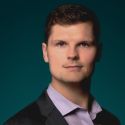
Trevor Yates joined Global X in 2023 as an Investment Analyst on the Emerging Markets team. Trevor spent the previous two years working at Mirae Asset with the same team. Before breaking into finance, Trevor was a professional hockey player in the AHL and ECHL. He graduated from Cornell with a degree in Applied Economics and Management in 2018. Trevor was born in Germany and raised in Montreal, Canada. |

Investing involves risk, including the possible loss of principal. Diversification does not ensure a profit nor guarantee against a loss.
The risks of foreign investments are typically greater in less developed countries, which are sometimes referred to as emerging markets. For example, legal, political, and economic structures in these countries may be changing rapidly, which can cause instability and greater risk of loss. These countries are also more likely to experience higher levels of inflation, deflation, or currency devaluation, which could hurt their economies and securities markets. For these and other reasons, investments in emerging markets are often considered speculative. Similarly, investors are also subject to foreign securities risks including, but not limited to, the fact that foreign investments may be subject to different and in some circumstances less stringent regulatory and disclosure standards than U.S. investments.
This material represents an assessment of the market environment at a specific point in time and is not intended to be a forecast of future events, or a guarantee of future results. This information is not intended to be individual or personalized investment or tax advice and should not be used for trading purposes. Please consult a financial advisor or tax professional for more information regarding your investment and/or tax situation.